- The Project Brief
- Posts
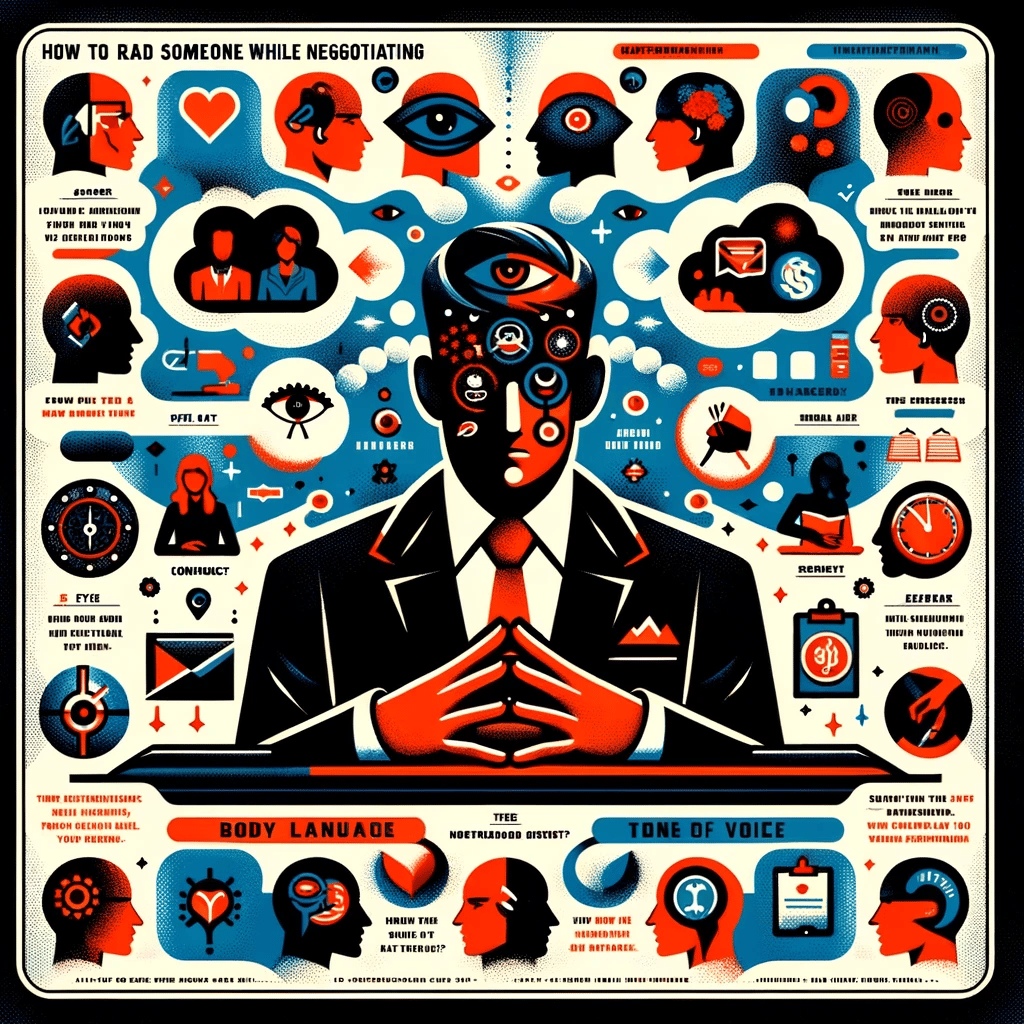
- How to read someone while negociating
How to read someone while negociating
Know why interpreting body language is the most unfair skill to master.
The Project Brief, Saturday, November 4 th, 3 min read.
Whenever I'm asked what superpower would enable me to dominate the world, I always choose "Reading people's minds". It's a recurring fantasy for many people, and one that most believe to be unattainable, but there's a fascinating science that comes close, called synergology, which, if properly mastered, can reveal some information about a person that they wouldn't otherwise reveal.
Synergology can be used to obtain information that's important to us, depending on the intentions behind it: seduction, interrogation, social interactions, interview, negotiation, conflict resolution.
Today I'm going to focus on the subject of negotiation, which is part of a project manager's daily routine, and for which synergology is one of the aspects worth mastering.
The idea that everyone wants a win-win situation is far removed from the real objective of negotiation. If everyone were satisfied with the outcome of their own negotiations, there would be no regrets at the end of the session and no phrases such as "if I'd known this information, I would have used it to my advantage".
The science of body language wouldn't be so popular, and no one would spend time using it to try to extract information that might benefit them.
In my early days as a project manager, I didn't realize what an open book I was.
Before I knew the basic tricks of body language interpretation, I'd arrive at meetings armed only with my contractual clauses, which I knew by heart, and my desire to negotiate the most advantageous deal possible for my employer. Obviously, I knew the circumstances surrounding said negotiation, who had done what, how, where and why.
The discussion would begin with the basic parameters that everyone knew as well as I did, and eventually agreements would be signed between all parties. Sometimes I'd win points, sometimes I'd lose them, not realizing that the ones I'd lost might have been my own fault.
If I'd known what I know now, I could have adapted my behavior to the situation and used the same weapons as the others.
Closing certain doors in your mind to reveal as little as possible doesn't mean closing all the doors, as in poker.
Card players behave so as not to reveal anything about their game to each other. Doing the same at the negotiating table guarantees a level of distrust that will make your meeting a resounding failure.
Strange as it may seem, the best thing you can do is:
Arrive relaxed at the negotiating table, to keep your mind open to the signs of your interlocutors.
Be accustomed to reading body language, to be able to extract information from everyone, without giving anything away.
Lead your meeting with the same energy and enthusiasm as usual, while controlling your signals when the negotiation is started.
Point 2 is of paramount importance. When it comes to reading body language, the sooner you start practicing, the better. Get into the habit of recognizing body signals and what they mean. The day you get the hang of it and enter the negotiation room, it'll become automatic, and you won't have to think about it.
One thing that can be very helpful in interpreting body language is getting to know the person you're talking to on a daily basis. For a project manager who deals with customers and suppliers on a daily basis, chances are this is already the case.
Be attentive when you look at people, but don't be inquisitive. Otherwise, you'll arouse suspicion or prevent them from acting as they normally would.
Observe how the other person responds to your statements or offers. Flexibility in body language can indicate a willingness to compromise, while rigidity may suggest a tougher stance.
You already know what's at stake. Its importance should already give you an idea of the attitude your interlocutor will adopt if your proposal falls far short of his or her expectations. If you see resistance, it's time to change your approach or change the subject and come back to it later.
Pay attention to how the other person uses their hands. Open and relaxed gestures often indicate honesty and confidence, while closed or fidgety gestures may suggest discomfort or deception.
Someone hiding their hands under the table means they may have information they don't want to tell. Ask them what they know about a specific situation in which they were involved.
Crossed arms are a sign of closure to what the person is hearing. Ask them what they think about what you've just explained.
Remember that interpreting body language is not an infallible method. It is therefore necessary to combine this skill with other abilities such as active listening, communication…And some other unfair tricks too.
That is why you can’t miss my article next week, What you need to know about the four colors of human personality - Strive in your professional life by knowing how to recognize personality types.
You'll learn how to recognize the four main personality types and the behaviors you can expect. You'll also learn how to deal with them, and how to get them on your side.
Thanks for reading The Project Brief. Subscribe to receive new posts each Saturday.
Feel free to share this letter with those who could benefit from it.